

I hesitate, and look up once more at my toothless guide grinning at me as I hold the raw mussel soaked in fresh lemon juice, hovering it at my lips. There’s a stormy feeling in the air, but his energy radiates ease and playfulness to me, so I go for it. I can’t help but smile as I do.
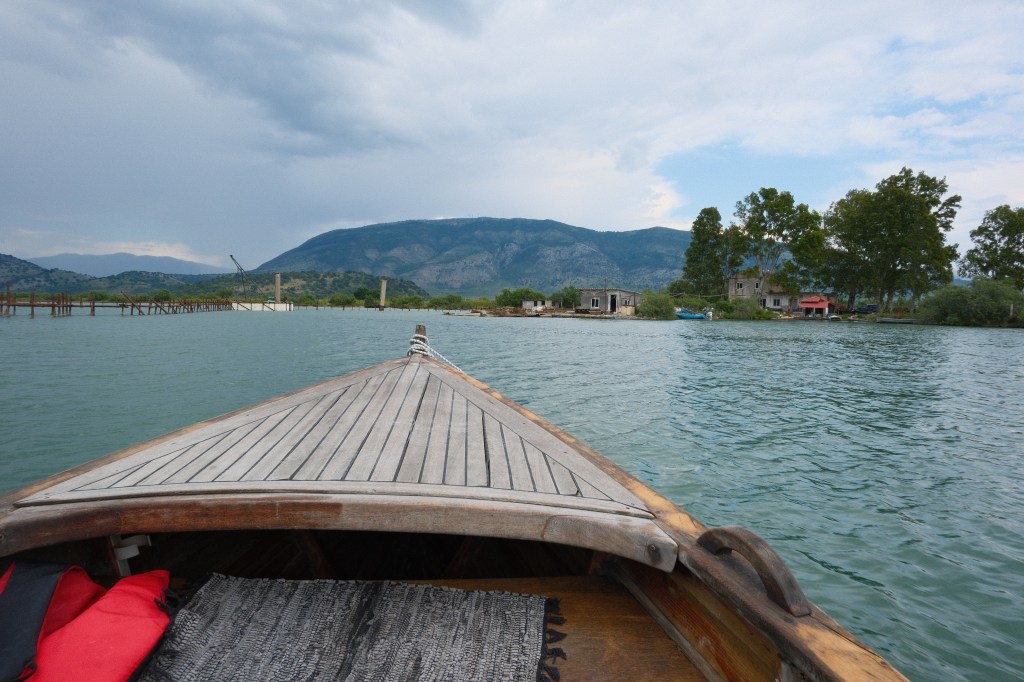
Lake Butrint is situated in Butrint National Archaeological Park, the first UNESCO site in Albania, and is famous for it’s Blue Mussels, also known as “The Queen of the Lake”. It is a salt lagoon consisting of both fresh and salt water, making ideal conditions for mussel farming.
The Mussel Farming Tour was one of the few tours I had found in advance of this trip and knew we needed to do. At the start of the trip, about two weeks before staying in Ksamil, I eagerly WhatsApped the tour company to check that it was available when we were there. We took the bus from Ksamil to Butrint, already used to no bus schedule and trusting locals telling us to stand on a street corner and “something will come within 15 minutes”, which it always did. When we got to Butrint we had some time before the tour started, so we looked around the bus stop and car park area, concluded there was nothing to do except enter the archeological park (which we didn’t have enough time to properly do), and reluctantly sat in the local bar for a drink. Honestly, it wasn’t the nicest spot and was a bit pricey for the area. I wouldn’t have otherwise gone there if we hadn’t needed to pass the time and use a toilet, but it was fine.
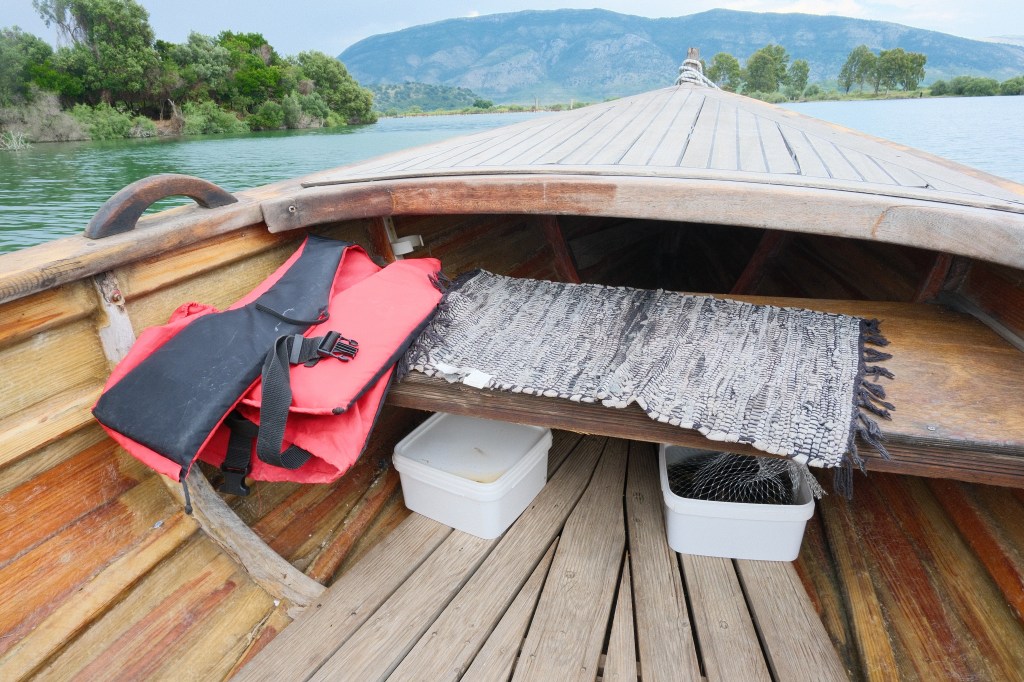
We promptly wandered over to the meeting point, having been messaged our captain’s name and told he is a “real fisherman and an interesting character” – we weren’t disappointed. Our captain and guide enthusiastically welcomed us and helped us onto the boat, both charming, sharing their infectious smiles and an immediate feeling of fun with us. The boat was sturdy and comfortable with an edge to it. I recall the captain calling us ‘Romeo and Juliet’, having a giggle about that and something else, and then heading off into the lake. We soaked up the salty air and view of the archeological park from the water, and as we glided around our captain and guide stretched their broken English to highlight key features of the park, most humorously to me translating farms as “fish prisons”.
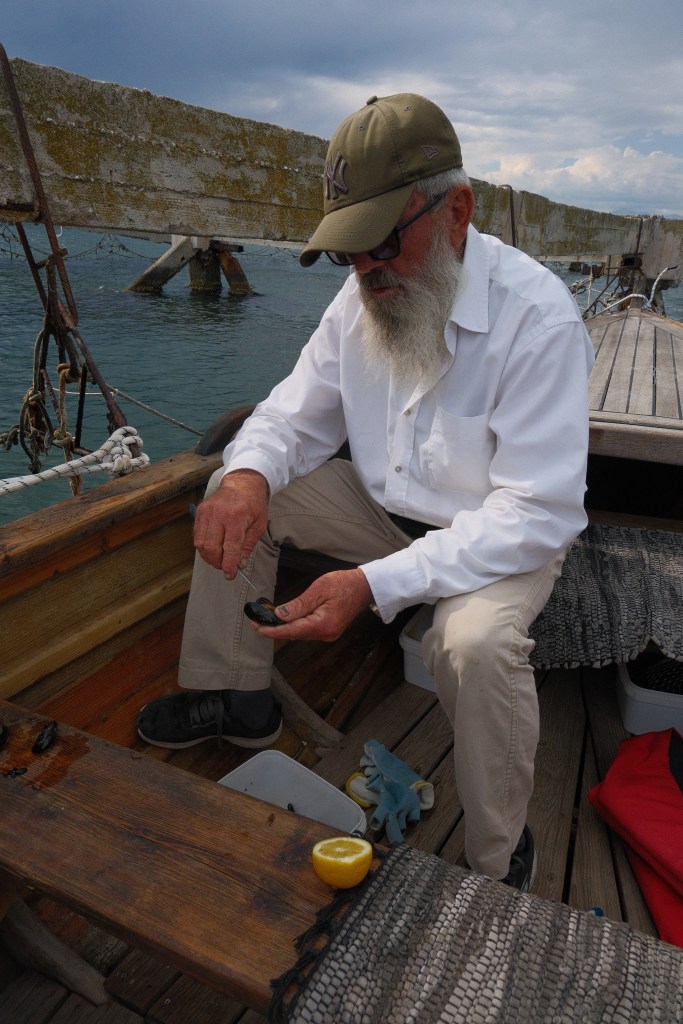
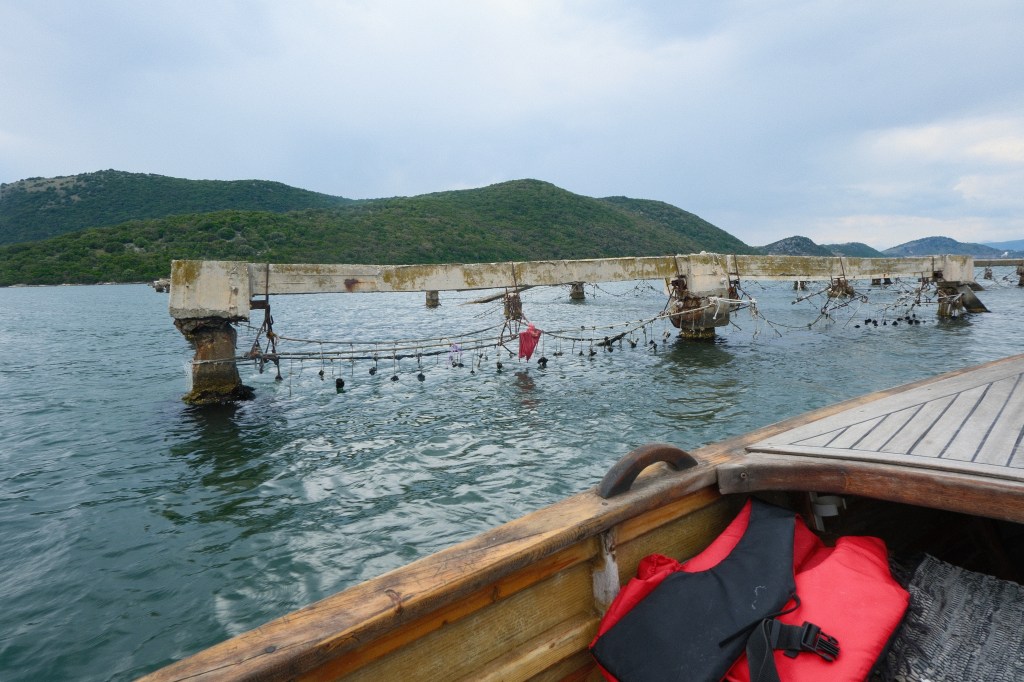
The first stop was the mussel farm. Our captain tells us where the baby mussels and adult mussels are, and that they take one to two years to grow. His information is limited, but the way he speaks so enthusiastically allows me to follow and feel with him the beauty and scale of the mussel growing process without being drowned in facts and statistics typical to a tour. He pulls up some mussels and lets us stroke them. Captain then opens a fresh, raw mussel, squeezes some lemon juice over it, and eats it. He prepares the same for me. I’ll admit, I wasn’t aware of general caution towards eating raw shellfish before this. Despite a hesitant instinct, I trusted the captain and the quality of this place. And I am so glad I did as it was delicious.
He then pulls a bag of mussels from under his seat, and teaches us how to prepare them for cooking later by pulling a clump what I can only describe as of hair-like salty barnacle strings from the mussel. He rubs his beard with his only word to explain as “barber”, and shows us how to pull them. The byssal threads or ‘mussel beard’ are actually strong, fibrous filaments that mussels make to attach to each other or other structures to help them stay in place and safe during tidal changes and storms. They should be removed as they would not be pleasant to eat! The amount of hair and therefore difficulty to pull varies, so I unapologetically grab the bigger pieces leaving the smaller for my partner and our guide.
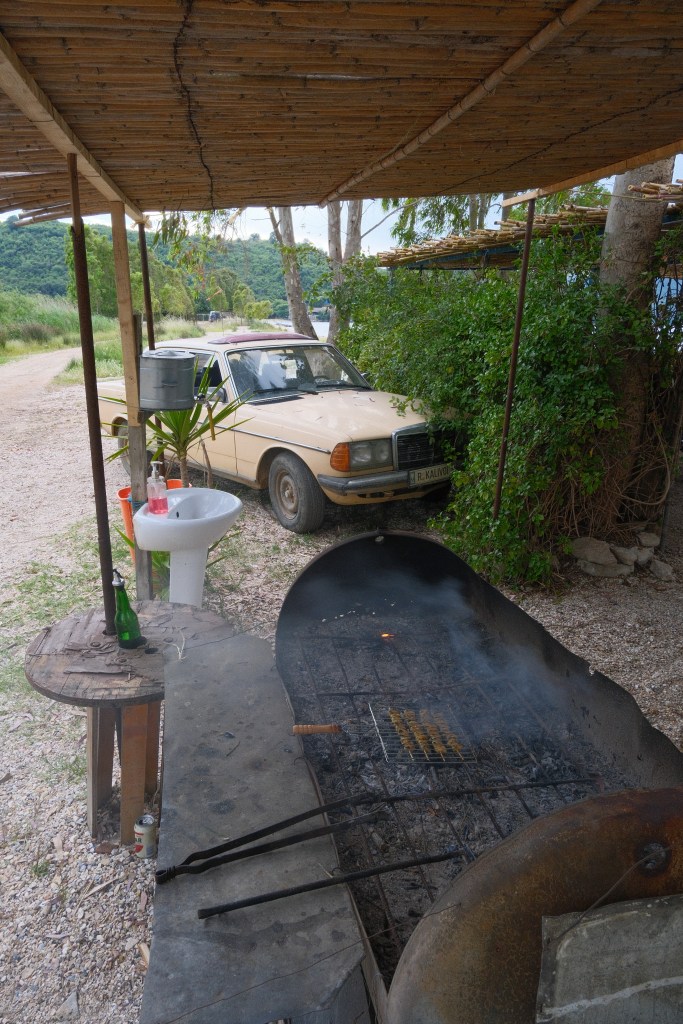
We then go to the restaurant. As we approach it, my partner and I turn to each other and giggle. There are two caravans, the frame of a large umbrella, a sheltered shack-like seating area and a large Albania flag. Two children run up the small pier to join their father, all waving at us and smiling. We are the only other people there. We are again greeted eagerly and kindly, and taken over to see a beautifully set area. I explore, walking up the shoreline briefly looking at the small stones and shells, and then back to the restaurant to have a look at the barbecue area.
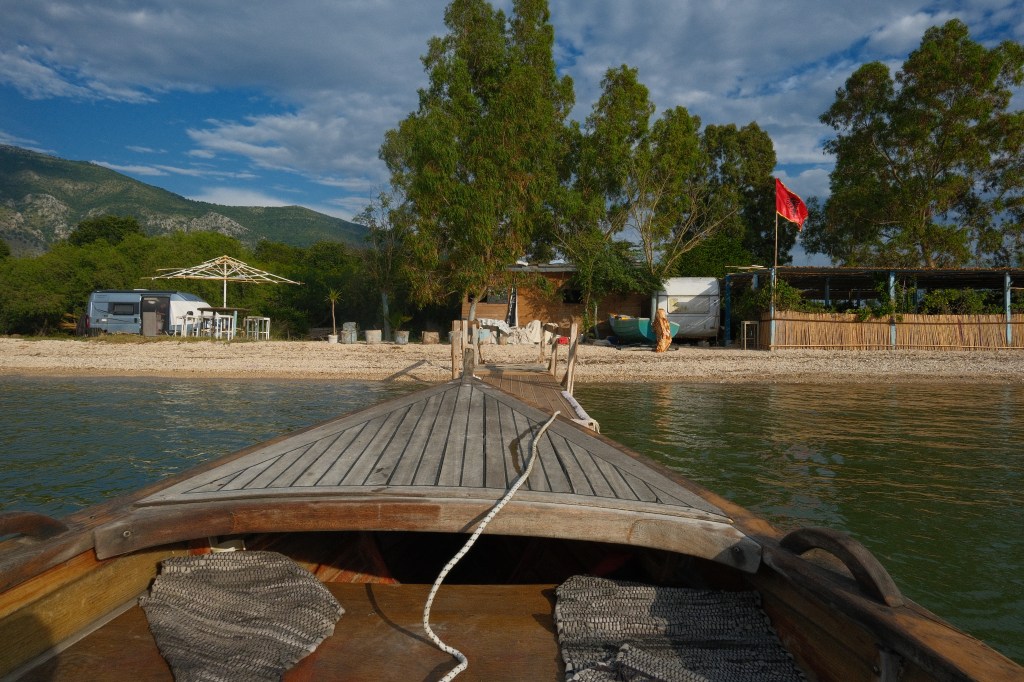
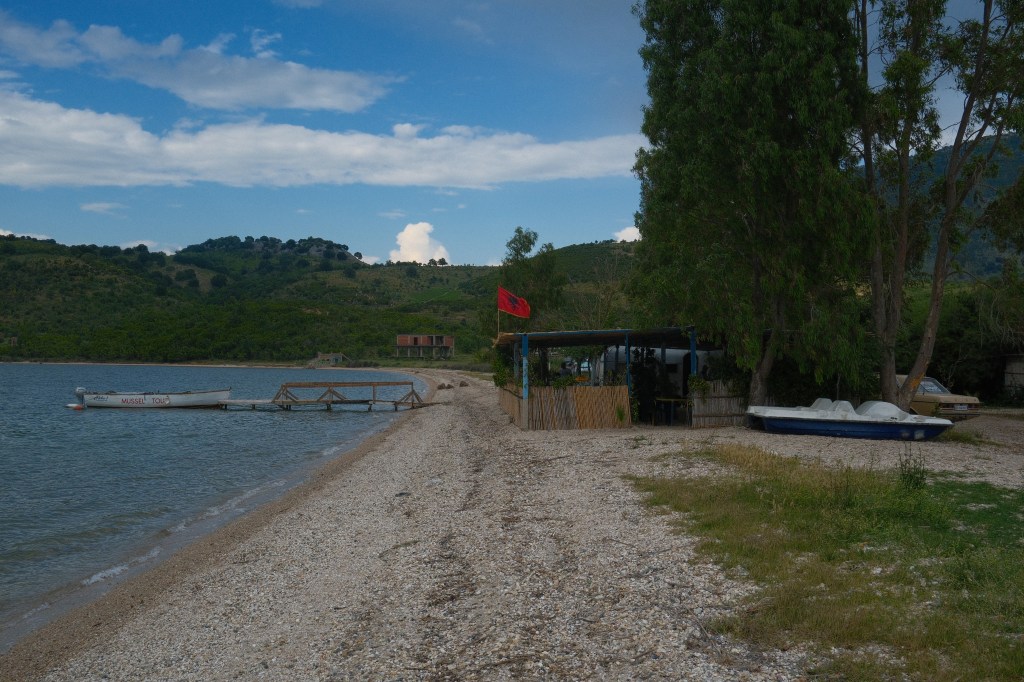
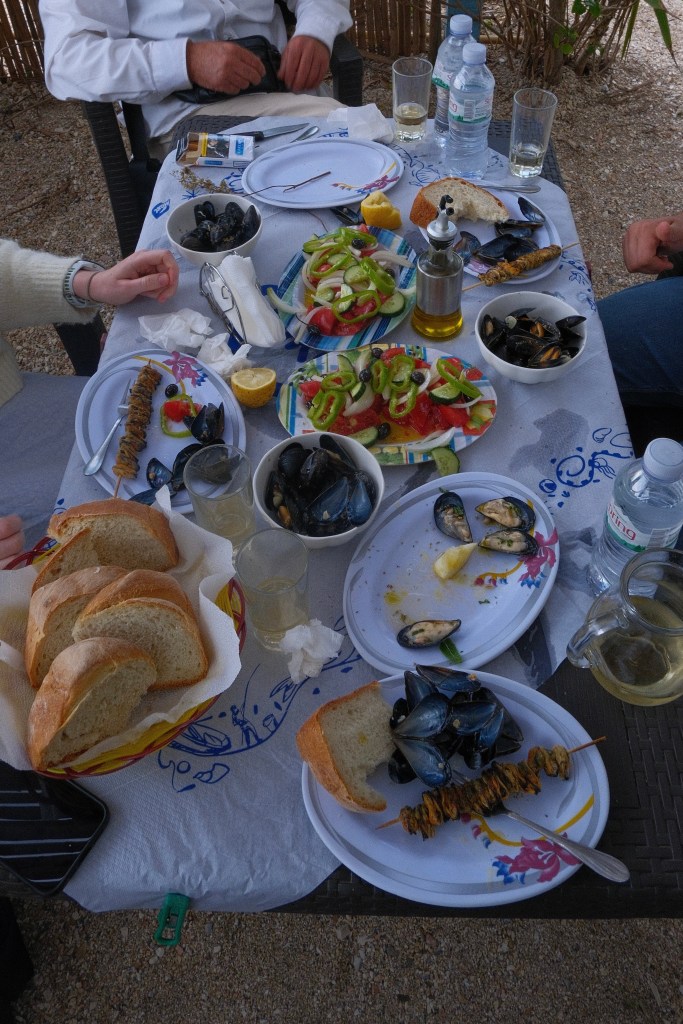
As I lean into my plastic chair, we are given a carafe of white wine, water, Greek salads, bread, and three mussel dishes: more raw mussels with lemon juice, “olio” and fresh oregano from the nearby mountains, mussel skewers cooked on the barbecue, and boiled mussels. We chat with our guide and captain, laughing and learning about the local area, where they are from, and the history and culture of Albania through their stories and experiences. Again, despite the limited English and our non-existent Albanian, I find myself easily following along and building an understanding of their views which educate me far more than reading or museums would. I look around and take in the expansive view of the lake and surroundings.
We tell our captain we need to be back for the last bus, which he thanks us for letting him know as previous tourists have just missed it from not saying. Then we get back on the boat for the scenic return to Butrint, now sitting with a full stomach and full thoughts wandering between the stories of Albanian history and life, and whether my stomach will be okay after eating so many mussels. Our captain waves and chats to every fisherman and friend we pass, and enthusiastically tells us how lovely they are.
Key details to know:
- We visited Albania in May 2026, as part of a two week trip to Montenegro, Albania and Corfu. I write about the full trip here.
- I found the trip on ksamil.al, and booked via WhatsApp.
- We wanted to pay by card so paid at their restaurant in Ksamil called Mëndra. I would really recommend eating here, it was my favourite Albanian food and dining experience in Ksamil.
- The tour we did started at 16:00 and lasted just under two hours as we wanted to get the last bus (18:00) back from Butrint to Ksamil. If you do the same, you should tell your guide and captain you need to be back for the last bus. I think there is also a midday tour option.


Leave a Reply